Understanding Seaweed Farming
1.What is Seaweed Farming?
In Japan, where seaweeds have long been an integral part of food culture, seaweed farming has been practiced for centuries, and technologies for stable cultivation and harvesting have continuously evolved.
Today, seaweed farming is gaining worldwide attention not only for food production, but also as a source of sustainable materials, such as cosmetics, pharmaceuticals, animal feed, biostimulants, biomaterials, and biofuels. As a result, investment and interest in seaweed cultivation continue to expand globally. In many regions, cultivation initiatives are being developed around locally abundant seaweed species, with farming methods tailored to local environmental conditions and cultivation objectives.

In addition, seaweed is increasingly recognized for its environmental benefits. Efforts such as seaweed habitat restoration, biodiversity conservation, and blue carbon initiatives are creating new opportunities for seaweed farming to contribute to a more sustainable future.

2.Process of Seaweed Cultivation
In seaweed farming, spores are attached to cultivation substrates such as ropes or nets, grown offshore for a designated period, and then harvested.
Seaweed Cultivation Process
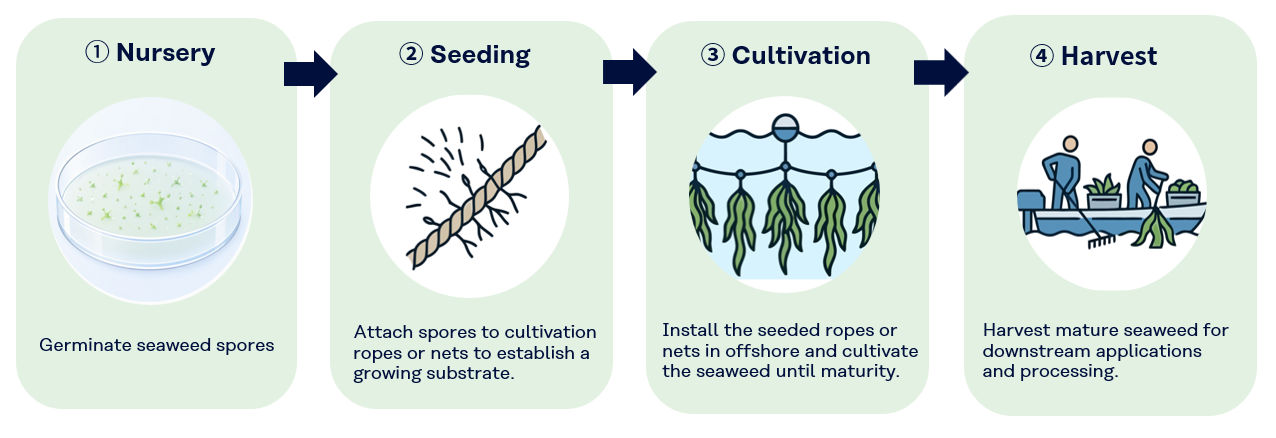
Seaweed cultivation technologies have advanced over time, but many conventional cultivation methods still rely heavily on manual labor. To support the continued growth of the seaweed industry, efforts are underway to improve productivity, increase operational efficiency, and enable larger-scale farming operations.
At the same time, new cultivation technologies are being developed to address challenges associated with changing marine environments and climate change.
3.The Importance of Cultivation Substrates in Seaweed Growth
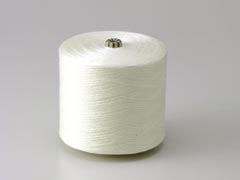
Successful seaweed farming depends not only on environmental conditions but also on the cultivation substrate to which spores attach. PVA fiber is highly hydrophilic compared with many other synthetic fibers. Its unique characteristics promote excellent spore attachment, while helping reduce detachment in the offshore growth stage.
In addition, it shows high strength and weather resistance, enabling long-term durability for use in marine environments. Leveraging these advantages, PVA fiber has been used in seaweed cultivation for more than 60 years and continues to support the industry's growth.
It has a long history of use in the cultivation of Pyropia (nori), Undaria (wakame), and Laminaria (kelp) in Japan.
In addition, its high spore attachment performance has been recognized in trials involving Ulva (sea lettuce), demonstrating its potential for supporting diverse seaweed farming applications around the world.
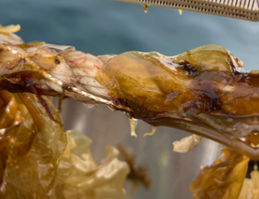
We offer a wide range of PVA fiber products, including spun yarn, filament yarn,
twine, rope, nets, and woven fabric, to accommodate various seaweed cultivation methods and projects.
If you are interested in seaweed farming, marine ecosystem restoration, or blue carbon initiatives, please feel free to contact us.